
Medicare 101: Understand the Basics
Understand Parts A, B, C and D, compare the two coverage paths, and find the enrollment dates that apply to you. Medicare 101 is an educational starting point; the main Medicare page connects you with Anil’s personal services and local guides.
English, Hindi and Sindhi. A call, booking or inquiry does not enroll you, bind or change coverage, or confirm an appointment.
What do Parts A, B, C and D mean?
- Part A — Hospital insurance: Helps cover inpatient hospital care and certain skilled nursing, hospice and home health services. Coverage conditions and cost sharing apply.
- Part B — Medical insurance: Helps cover doctor and outpatient services, preventive care and certain medical equipment. It generally has a monthly premium and other costs.
- Part C — Medicare Advantage: A Medicare-approved private-plan alternative to Original Medicare that includes Parts A and B and usually Part D. Check networks, prior authorization, covered services and costs.
- Part D — Prescription drug coverage: Available through a separate Medicare drug plan or usually within Medicare Advantage. Check your exact medicines, formulary, pharmacy and any coverage restrictions.
COVERAGE PATH 1
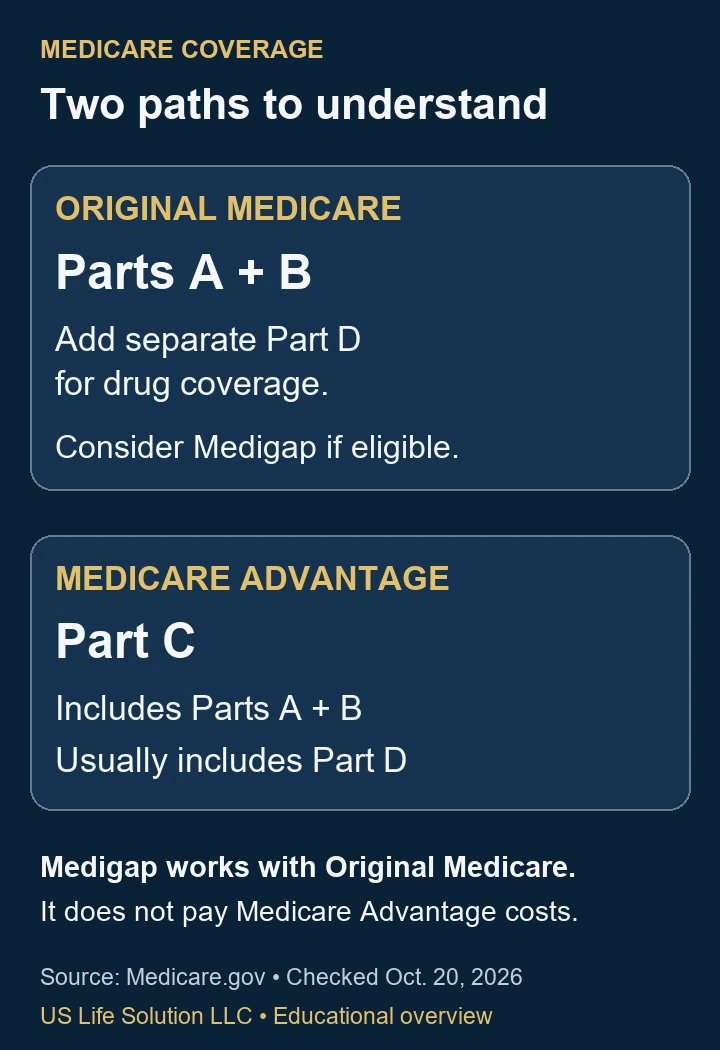
Original Medicare
Drug coverage: You can add a separate Part D plan.
Help with cost sharing: You may be able to buy Medigap. Enrollment protections and underwriting rules matter.
Check before choosing
Providers who accept Medicare, separate drug coverage, premiums and out-of-pocket costs.
COVERAGE PATH 2
Medicare Advantage
Usually includes Part D
A Medicare-approved private-plan alternative to Original Medicare.
May include extra benefits
Benefits vary by plan, county, year and eligibility. Costs, limits and conditions may apply; check the exact plan.
Check before choosing: Provider networks, prescriptions, total costs and prior authorization rules.
With either path: You generally continue paying your Part B premium. Medigap does not pay Medicare Advantage costs. A coverage review does not require a plan change.
Sources checked October 20, 2026: Medicare coverage paths and gym and fitness coverage. Educational overview; confirm plan-specific details before enrolling.
Choose what to learn next
- Turning 65? Build your Part A/B enrollment plan with an interactive calendar, document checklist and official application steps.
- Compare coverage: Medicare Advantage, Medigap and Part D prescriptions.
- Know your dates: Initial, annual and special enrollment periods · 2027 coverage review during fall Open Enrollment.
- Still working or retiring? Check when Part B or Part D can be delayed. Current-employment coverage, COBRA, retiree benefits and creditable drug coverage have different rules.
- Higher income? Estimate IRMAA and find the relevant tax-document figures. The interactive estimate currently uses verified 2026 amounts, not unverified 2027 rates.
- Need help with costs? Review Medicare’s official assistance resources · New Jersey residents: NJSave. Agencies determine eligibility.
- Find help near you: Medicare service-state directory · New Jersey county guides.
Medicare Advantage
Medicare Advantage includes Parts A and B and usually Part D through a Medicare-approved private plan. A plan’s network, service area, prior authorization and cost sharing affect how you receive care. Extra benefits vary; check the exact plan and coverage year rather than a carrier name or advertisement.
Medicare Supplement
Medigap is separate insurance used with Original Medicare to help pay specified cost-sharing. You generally can use providers nationwide who accept Medicare; Medicare SELECT policies can require certain providers for full benefits. Premiums, covered benefits and enrollment protections vary. Compare policy details and any separate Part D coverage before choosing.
Keep three different enrollment clocks separate
First-time Medicare enrollment: Confirm your Part A and Part B dates with Social Security. The usual age-65 Initial Enrollment Period spans seven months; automatic enrollment and special circumstances can change what you need to do. Do not treat fall Open Enrollment as a substitute.
Annual plan review: October 15–December 7 is the fall Medicare health and drug plan Open Enrollment period. For 2027 coverage, review plans during October 15–December 7, 2026; changes generally start January 1, 2027. Read your Annual Notice of Change and recheck doctors and medicines.
Medigap timing: The federal six-month Medigap Open Enrollment Period starts the first month you are 65 or older and enrolled in Part B. Other protections and state rules may apply. AEP does not automatically guarantee Medigap acceptance.
Before leaving existing benefits: Ask your benefits administrator how a separate plan affects you and family members. Keep written creditable drug-coverage notices; Part B and Part D delay rules are different. Confirm new coverage and its effective date before canceling anything.
Explore enrollment periods · Understand work and retiree coverage
Choose how to get personal help
Anil Khanchandani, CLTC®, is an independent licensed life and health insurance producer at US Life Solution LLC. He explains options from the carriers he represents, subject to location, eligibility, required licensing, appointments and certifications. Consultations are available in English, Hindi and Sindhi. He receives carrier commissions and charges no consultation or service fees.
No obligation to enroll. A call, booking, quote or form submission is a nonbinding inquiry; it does not start, change, cancel or bind coverage or enroll you in a plan. Any required Scope of Appointment and application or enrollment are separate steps. Keep Medicare numbers, Social Security numbers, tax returns and medical records out of ordinary email and callback forms.
You can also compare options at Medicare.gov or contact independent SHIP counseling. Anil does not offer every plan. Ask for the exact represented carrier and plan counts for your ZIP code and county.
Official information checked October 19, 2026: when to sign up, fall Open Enrollment, Medigap timing and working past 65. Educational information; the agency, insurer or plan determines applicable eligibility and coverage.